
Zero-Cost AI Sentinel: Enhancing Home Security with Python, FrameDiff, and Gemini
09/12/2025
571
views
17
#4 on leaderboard of challenge:

The Problem: Dumb Cameras & Late Alerts As a Cybersecurity student, I noticed a flaw in affordable security setups (like the one in my family's shop). Traditional cameras are passive. They record everything but alert you to nothing. By the time you check the footage, the incident has already happened. Smart AI cameras exist, but they are expensive and proprietary.
I wanted to build a solution that is Real-time, Intelligent, and Cost-effective using existing hardware.
The Solution: A Hybrid AI Approach I developed "AI Guardian" – a Python-based system that upgrades any standard RTSP camera into a smart sentinel. To optimize performance and cost, I didn't just stream video to an LLM. I used a hybrid pipeline:
-
Level 1: Motion Analysis (The Trigger) Using OpenCV and Frame Differencing, the system monitors the video stream for pixel changes. It filters out noise (lighting changes) and only flags significant motion patterns.
- Why? This keeps the system lightweight and prevents spamming the AI API.
-
Level 2: Generative Intelligence (The Brain) Once significant motion or a specific pattern (like a sudden fall) is detected, the frame is captured and sent to Google Gemini 2.5 Flash.
- The Prompt: I instructed Gemini to act as a security guard, analyzing the image for specific threats: intruders, weapons, or—crucially—people falling (health safety).
- Level 3: Instant Action If Gemini confirms a threat, the system sends a photo and a description immediately to my Telegram via a bot.
Implementation Logic Here is the core logic handling the optimization between raw Computer Vision and GenAI:
Python:
Code
Copied!
# Simplified Logic Flow
def monitor_stream():
    # 1. Detect Motion using Frame Difference
    frame_diff = cv2.absdiff(motion_prev, gray)
    motion_score = frame_diff.mean()

    # 2. Filter Patterns (e.g., Sudden high motion = Fall)
    if motion_score > THRESHOLD_HIGH:
        # 3. Verify with AI
        ai_analysis = ask_gemini(current_frame)

        # 4. Alert if critical
        if "danger" in ai_analysis or "fall" in ai_analysis:
             send_telegram_alert(current_frame, ai_analysis)
<br>
Real-World Result I deployed this system at a local hair salon.
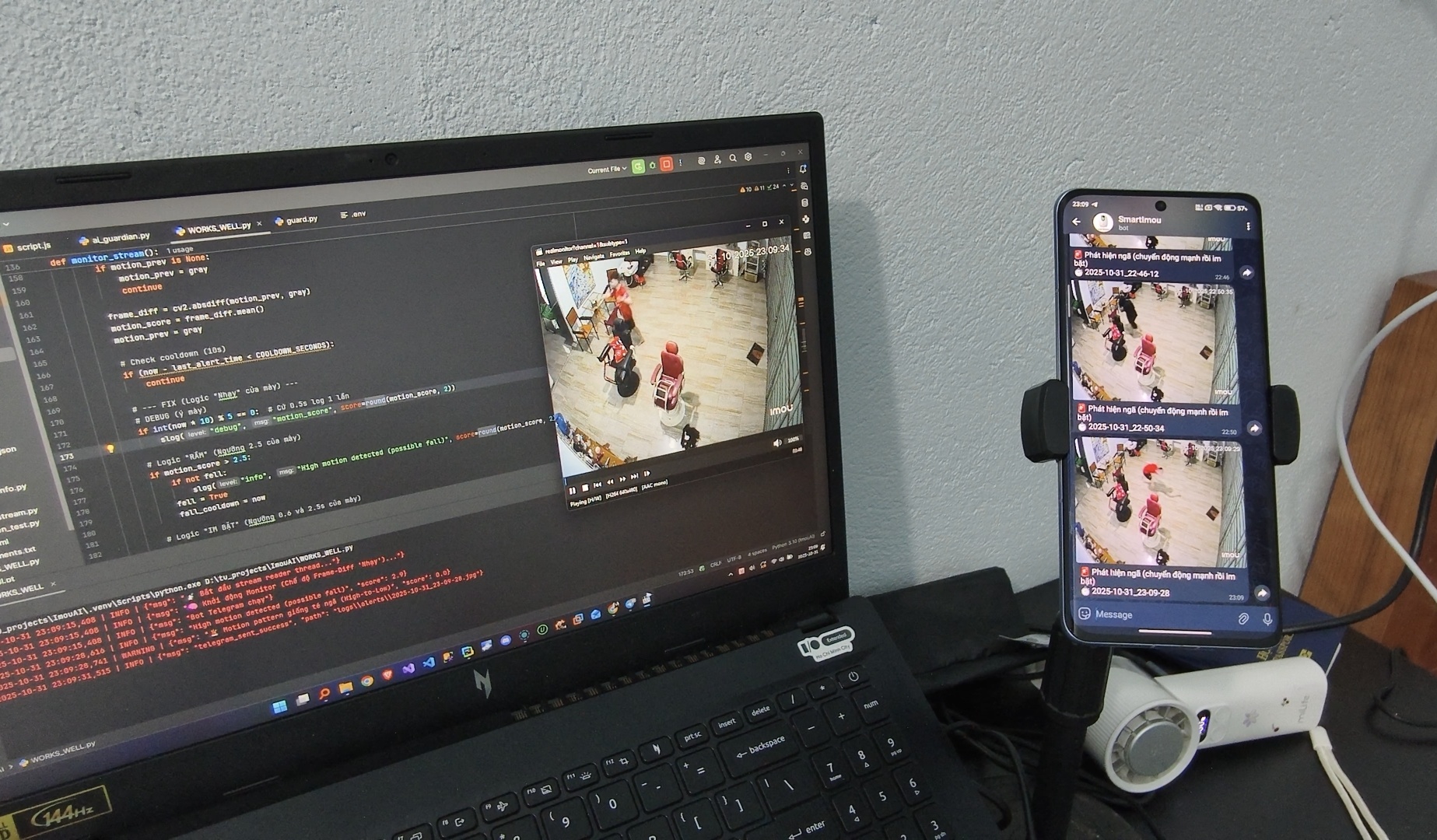 The system running on a laptop, monitoring the live feed and sending alerts to my phone in real-time.
The system successfully detected simulated dangerous behaviors and falls (as seen in the Telegram logs below) with a latency of under 3 seconds.
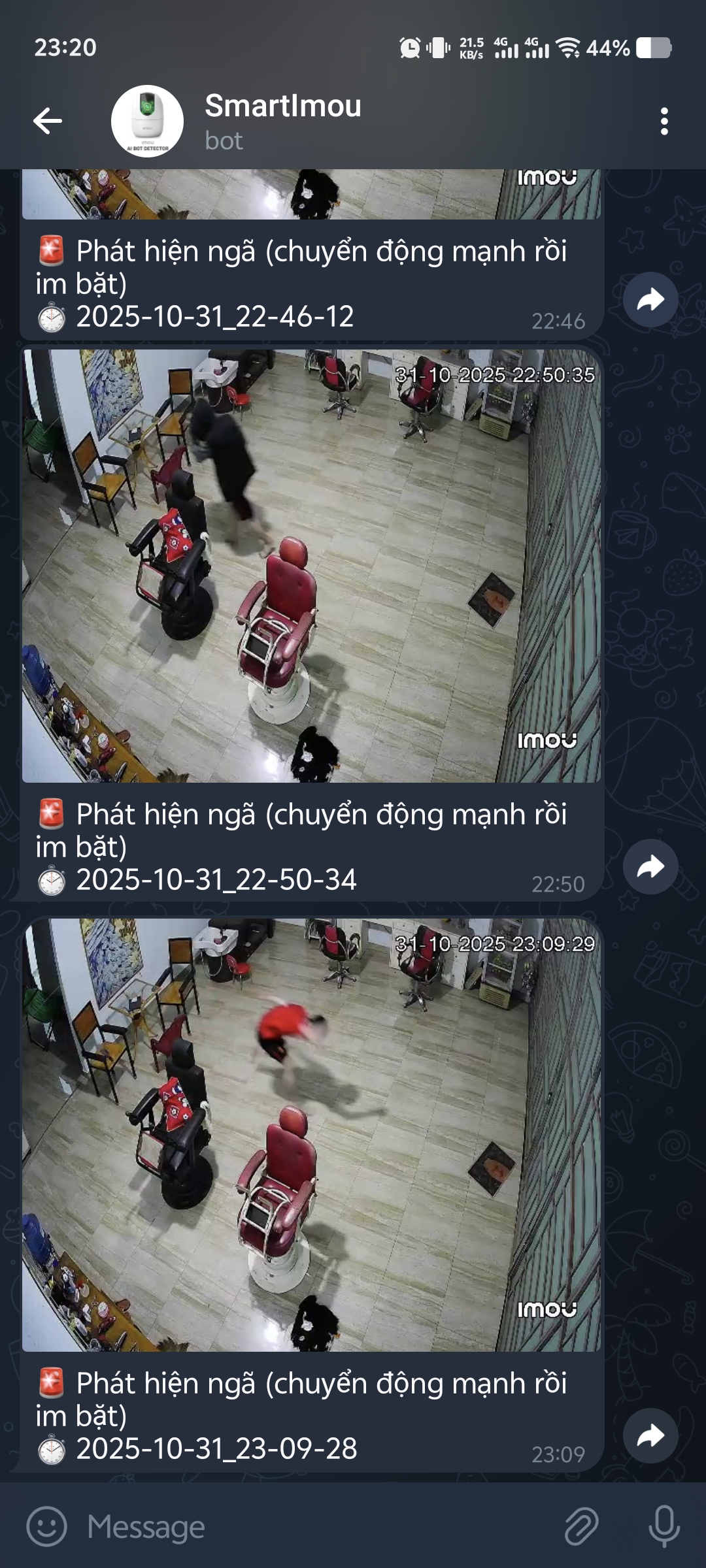 The bot successfully detecting a "Fall" event—crucial for monitoring elderly people or slippery floors.
Why This Matters? This project proves that "AI for Good" doesn't need expensive servers. By combining classic algorithms (for speed) with LLMs (for understanding), we can turn ubiquitous, cheap hardware into life-saving tools. It’s not just about catching thieves; it’s about detecting accidents when no one else is watching.