
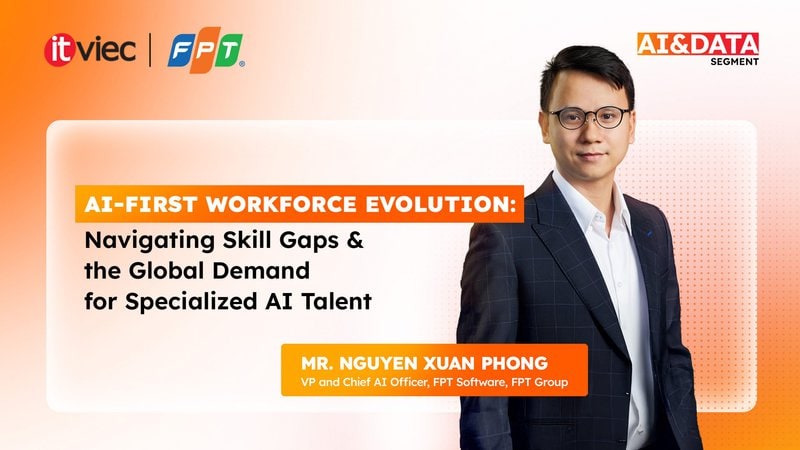
As technology leaders, IT professionals, and executives navigate the current global landscape, the conversation is dominated by AI’s impact on productivity, talent demand, and organizational structure.
Mr. Nguyen Xuan Phong, FPT Software VP & Chief AI Officer, FPT Corporation, offers key insights into these transitions, emphasizing that while AI is reshaping the industry, it is primarily an augmentation tool, not a replacement force.
Here is an insightful recap at the current dynamics of the global IT industry, evolving customer requirements, FPT’s strategic response, and the critical skills needed for the new generation of IT professionals.
View the detailed conversation of Mr. Phong and ITviec in this Youtube Video:
The true drivers of tech layoffs
The recent wave of big tech layoffs, particularly in the US, has led to speculation that AI is gutting the IT workforce. Mr. Phong clarifies that the causes are intertwined, driven by multiple factors:
1. Macroeconomics/Workforce Adjustment: Many big tech companies rushed to hire during COVID-19 to serve short-term demand spurred by increased online application usage. The recent layoffs represent an adjustment back to normal demand.
2. Financial Reasons: Companies are aiming to make the bottom line look better and protect profit, leading to the layoff of unused workforce.
3. AI Productivity Improvement: Generative AI is becoming applicable for enterprise automation, enabling companies to work more efficiently.
Mr. Phong stresses that AI is currently “not a replacing tool or a replacing force for IT developers”. He delivers a crucial warning for professionals: “Only the people who use AI efficiently will replace the people who cannot use AI”.
The total demand for IT is still increasing
Despite productivity improvements leading to leaner teams, the overall demand for IT developers continues to rise. This phenomenon is comparable to efficiency gains in other industries: when the cost of production decreases, demand increases.
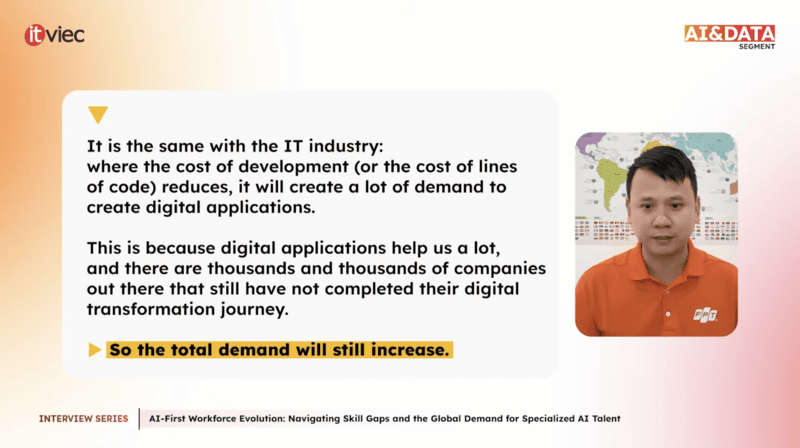
“It is the same with the IT industry: where the cost of development (or the cost of lines of code) reduces, it will create a lot of demand to create digital applications.”
Because digital applications are highly beneficial, and thousands of companies have not yet completed their digital transformation journey, the total demand for IT will still increase. While AI makes projects more efficient, requiring smaller team sizes, the industry will see “thousands of 50 people project rather than just few hundred 100 people project”.
The conclusion is that this shift “still leads to a higher demand in headcount of IT developers in the future, but it will be a new generation of developers”.
The spectrum of evolving customer’s AI requirements
Customer requirements regarding software development projects have fundamentally shifted from a skeptical, data-privacy-focused stance a couple of years ago to a widespread adoption and experimentation mindset today.
Customers now work with partners like FPT to achieve new kinds of projects characterized by shorter timelines and higher quality development. Mr. Phong organizes the current landscape of customer mindsets into three categories:
| The Skeptical End | The Middle (majority) | The Extreme End | |
| Customer Mindset / Trust Level | Still low trust in AI.Absolute priority on data privacy.Doesn’t want to touch any AI solutions. | Testing and experimenting; expecting clear resultsMore willing to adopt | High belief in AI’s transformative powerDemanding fundamental change |
| Specific Requirement & Demand | Requires FPT to deliver an on-premise, no internet AI assistant tool | General demands for new kinds of projects with shorter time and higher quality development | Demands a big transformation in software development and testing.Actively experimenting with AI agent tech/coding |
| FPT’s Response / Implementation | FPT must try its best to bring the AI model to the chip or to the edge device to ensure data privacy | FPT serves these customers with a very aggressive mindset in order to deliver more results and prepare for the future | FPT engages in deep experimentation to bring “the new power of development” to these clients |
This variety of requirements suggests that the decision to pursue in-house tech development or relying on partners often depends on the client’s core business.
Companies whose core business is not technology often prefer working with partners who have AI expertise to ensure successful project delivery, especially given that partners can sometimes offer more optimized costs.
In order to deliver the greater results and solutions for those customers in all spectrum, FPT is giving massive AI training for FPT people to use AI more efficiently and build momentum for continuous improvement.
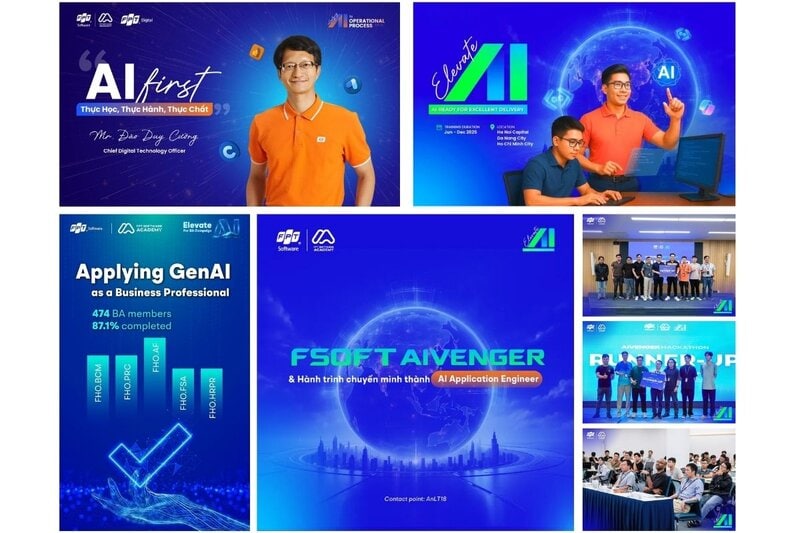
FPT massive AI training courses with great impact to penetrate AI-First mindset. Image source: FPT Software.
The Four Pillars and the AI-First Mindset
From Mr. Phong experience, organizational AI strategy is built on four key pillars, focused on moving from foundational research to workforce deployment to maximize AI’s impact:
| Pillar 1: Studied and built Research Lab | |
| Description / Focus | Starting from 2019 in Mila Lab, when no one could predict that AI could make big impact in the software development world, research from Google stated that they started to use machine learning and techniques applied in software development. => Nurturing a big dream and a big idea of how we can bring that into Vietnam and FPT by researching about AI impact |
| Key Achievement / Recognition | Got number #1 in ranking in Microsoft for a model of Code Understanding to summarize and translate code into natural language |
| Pillar 2: Formed an Innovation Team and a Product Team | |
| Description / Focus | Innovation Team: – Equip the best tools for FPT’s developers to fight in the fierce world – Do a lot of research on the market about AI agent, AI development tools, etc – Share it across other developers in the company Product Team: – Understand the specific process of FPT Software – Use that knowledge to build customized AI tools – Help developers work faster and more adaptive to the processes, frameworks |
| Key Achievement / Recognition | Could build a specialized language models that target a specific programming language (old, legacy code) like COBOL, APG Those models can understand those programming languages better than anyone else => Released the first version of X Mainframe language model that understands legacy code |
| Pillar 3: Built coding assistant | |
| Description / Focus | Code VistaTest Vista |
| Key Achievement / Recognition | Help developers code faster and test faster |
| Pillar 4: Implement and Encourage AI-First Thinking Mindset | |
| Description / Focus | AI-First is the name of the AI center. Requirements: – Have to approach the problem solving together with AI – Do not work alone – Do not try by yourself at the beginning but use AI from the very starting point => with that, you can unlock the full power and try to embed the new way of working from the start. |
| Key Achievement / Recognition | It does not mean you rely completely on AI, or use it all the time as a default choice, but to have a critical thinking and evaluation framework, so that you know when to use, the best time to use. “Have to use AI” is the default and a MUST in our organization. |
Penetrating the AI-First Mindset for larger scale: The AI Designated Team, strategic educational materials and AI Champion Role
To ensure the AI-First Mindset is implemented consistently and strategically across FPT’s large scale, Mr. Phong’s strategy has created the foundation with a designated team and specialized knowledge translation.
Designated Team and Strategy Formation: Strategic direction is established through specialized connections from around the world, including collaborations with leading professors and researchers in North America (such as those in Silicon Valley), Dr. Andrew Ng and Dr. Joshua Bengio.
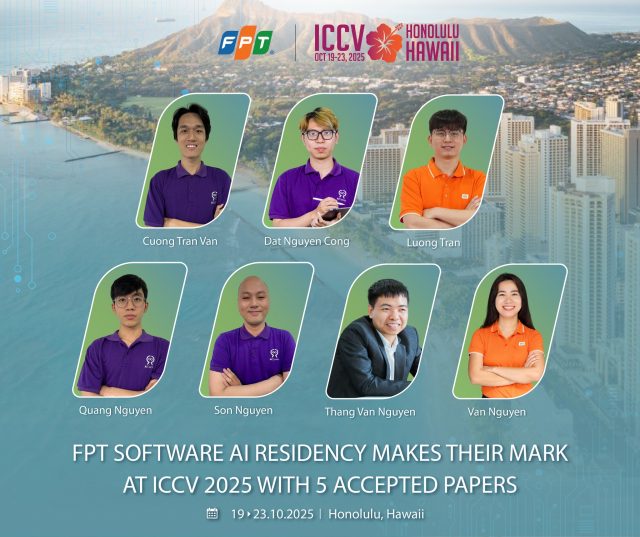
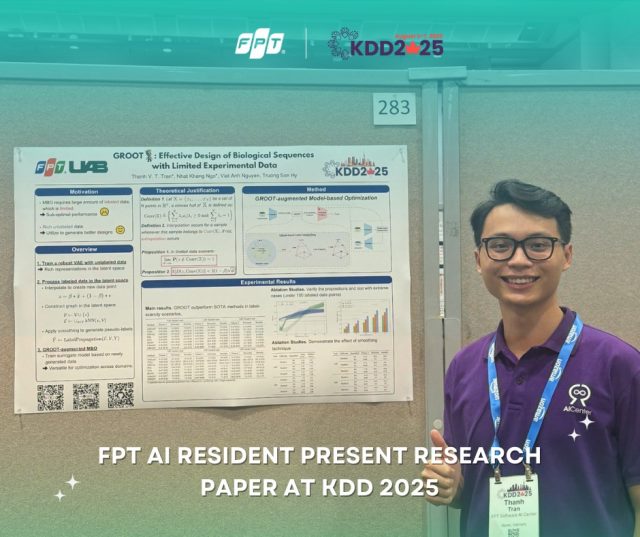
This global intelligence and inspiration are translated into internal strategies by a designated team that specialize in doing that. This team is responsible for forming the overall strategy and educational material for AI-First Thinking Mindset.
They also develop prototypes to inspire large numbers of employees. This systematic process is designed to slowly shift and change the entire workforce, allowing the new mindset to be elaborated and scaled up within the organization
To propagate this AI-First mindset across a large organization, FPT also created a dedicated, strategic role: the AI Champion.
“This new role is for people who understand how to use AI tools, how to measure the changes of working by using AI and how to inspire others with AI development.”
AI Champions act as leaders who make others follow, bringing new energy to the organization.
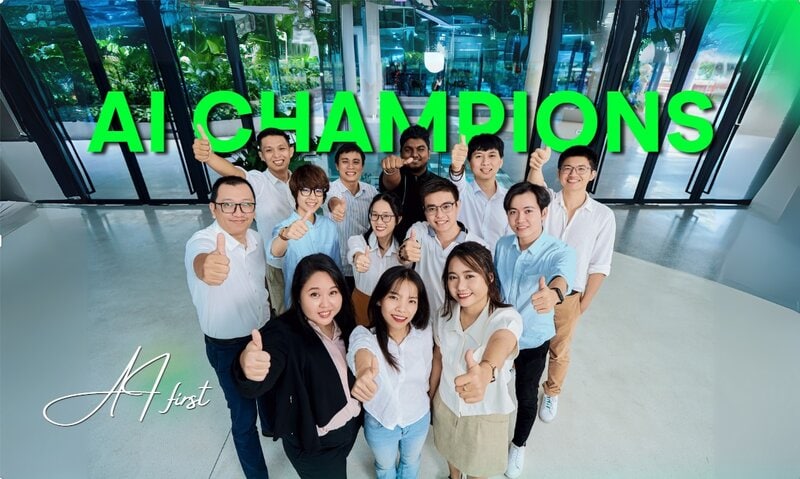
FPT is actively developing hundreds of these champions and plans to expand this program into the thousands. These champions will not only inspire FPT staff but also be sent to clients to coach and educate their IT teams on the friendliness and risks of AI.
Essential skills for developers in the AI era
For IT professionals concerned about their careers, the transition presents massive opportunities for those willing to adapt. Mr. Phong identifies significant skill gaps, focusing on two perspectives: whether a developer can build AI solutions and whether they can use AI to empower their work.
1. Computational thinking over programming language
Developers must shift their focus from merely mastering specific programming language syntax (Java, Python, Ruby, etc.) to focusing on computational thinking.
In the past, programming languages were the necessary tools to communicate with machines.
With Generative AI, professionals gain a “new weapon” to communicate via natural language (mother tongue), which AI can interpret and translate into code.
“The core importance of computational skills like abstractions like breaking down the task into smaller tasks are still very important at the root of your logic and your thinking.”
By having a strong foundation in computer science and object-oriented programming, and leveraging AI for translation and testing, developers become less dependent on specific programming languages and can develop applications much faster.
2. High-demand roles in the near future
In the short term, two roles stand out in high demand:
Developers skilled in using AI: Those who master AI tools to help their development process are in the highest demand. FPT is currently giving massive AI training to its people for this purpose.
AI Engineer: These professionals can build AI very well, understanding the system, architecture, and scalability of AI systems. They are skilled at building quick solutions involving AI agents and Generative AI applications.
The rise of AI also necessitates a focus on security and responsible AI experts. As AI systems interact extensively with personal and enterprise data, experts are needed to understand governance, mitigate risks, and prevent new types of attacks (e.g., attacking the AI system to make wrong decisions).
3. The critical role of soft skills and learning
Beyond technical competence, the AI era places immense weight on soft skills, especially communication.
As AI increases individual productivity, teams will become leaner, requiring developers to take on tasks traditionally handled by middle management or specialized roles.
“Communication has been a very important skill for engineers and for developers to foster to improve… developers have to improve and learn more about how to communicate effectively and that is to earn their trust…”
Effective communication (listening, speaking, reporting, and asking questions) ensures requirements are understood correctly, preventing work from going off direction. Developers need to be proactive to communicate with customers and stakeholders. Additionally, the ability to learn is crucial, as the AI tool landscape is changing every day.
The key message for IT professionals
AI is an irreversible technology that unlocks new capabilities, making the adoption of AI crucial for competitive advantage. Mr. Phong offers a two key messages for IT professionals navigating this transition:
1. Embrace AI: Learn about the beauty and risk of AI, and adopt it as a new friend in your life “as natural as possible and as quick as possible”.
2. Retain Human Value: Remember that you are still human. Use AI as a tool to amplify your intelligence and productivity, while remaining true to the core human values of “trustworthy,” “hardworking,” “creativity,” and “empathy”. These values will ensure long-term success in the future.
————————
This interview is part of the interview series between ITviec and Experts at FPT Software — an initiative to raise awareness, share real-world insights, and connect Vietnam’s IT community with global perspectives from top technology leaders. We aim to help Vietnam’s IT professionals gain practical perspectives on AI, Data, real stories and challenges in emerging technologies — bridging the gap between industry vision and career growth.
For more insight from other leaders and latest job opportunities in AI/Data field, visit ITviec’s AI/Data Segment now!
